Get help now Make a donation

Time to Talk Day

Time to Talk Day is on 5 February 2026. 
It's the nation's biggest mental health conversation. A chance to listen, share, and talk about what really matters.

Brave the big talk

Brave the big talk

This Time to Talk Day, we’re encouraging you to brave the big talk – and have conversations about mental health experiences that might still feel a bit unspoken.

We’ve made great progress in destigmatising mental health problems and improving attitudes. But we need to keep going. There are still times when what we are living through can feel really big and difficult to talk about.   


If you’ve reached out for support for your mental health, and been put on a waiting list, we know how difficult life can be whilst you wait.

You can read our support for coping while you’re waiting for therapy 


There’s many different experiences of 
hearing voices – sometimes they are frightening or intrusive. But voices can also be comforting, helpful, or annoying! There’s a lot of stigma around voice-hearing.

Read our guide for friends and family on how to be helpful to someone who hears voices.


The days and weeks after a suicide attempt can be overwhelming, and it can be hard to know what to say or do next.

Mind has tips to help you cope and guidance on how to support someone who has attempted suicide. 

What is Time to Talk Day?

Time to Talk Day is the nation’s biggest mental health conversation. It’s a day for all of us to come together to talk, listen and change lives. 

Why is talking important?

Talking openly and honestly can be the first step towards better mental health for everyone. It can even save lives. Talking can reduce stigma and help people feel comfortable enough to seek help when they need it.

The power of being able to talk about your own experiences and turn them into something positive is huge.

Share our campaign on social media

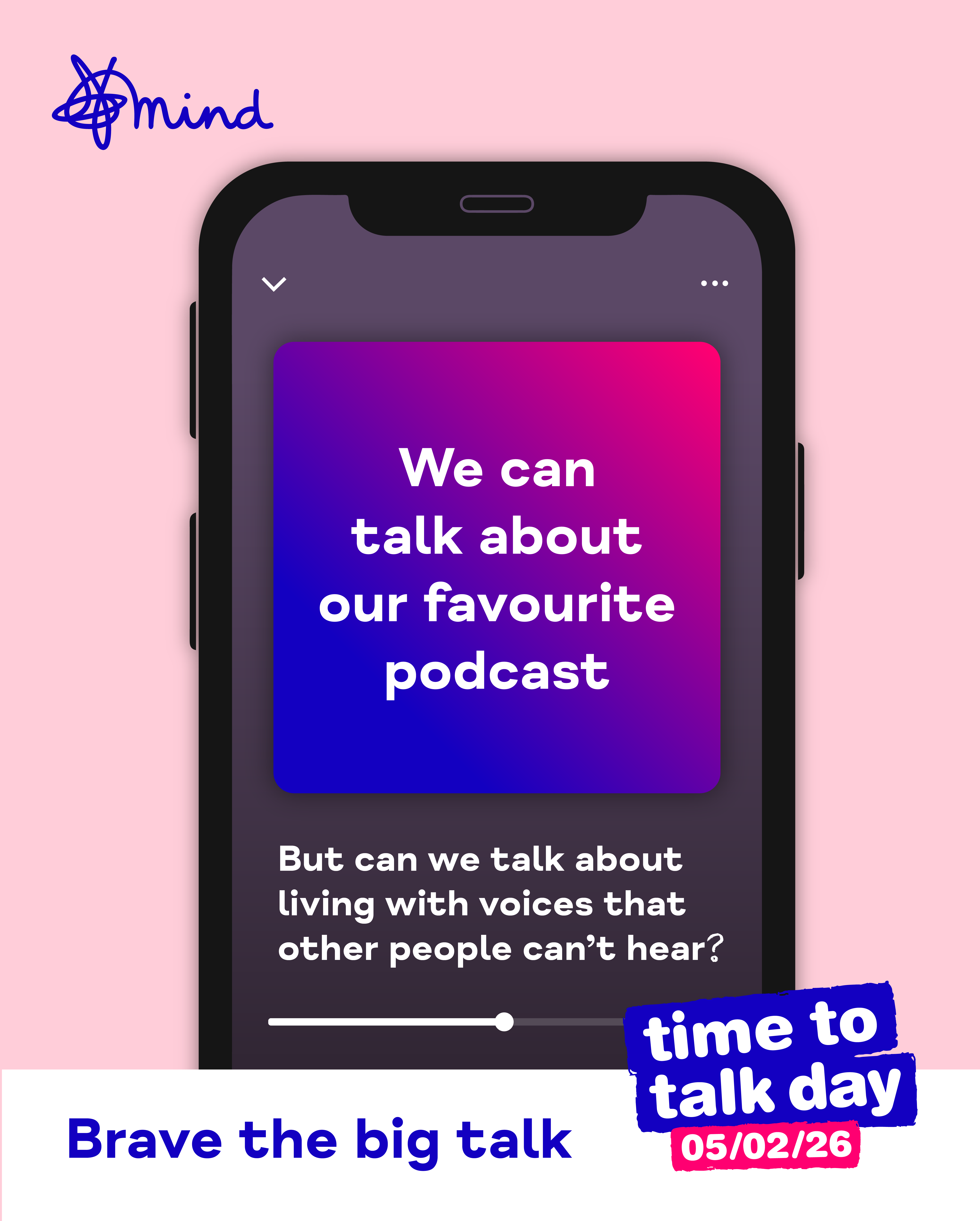
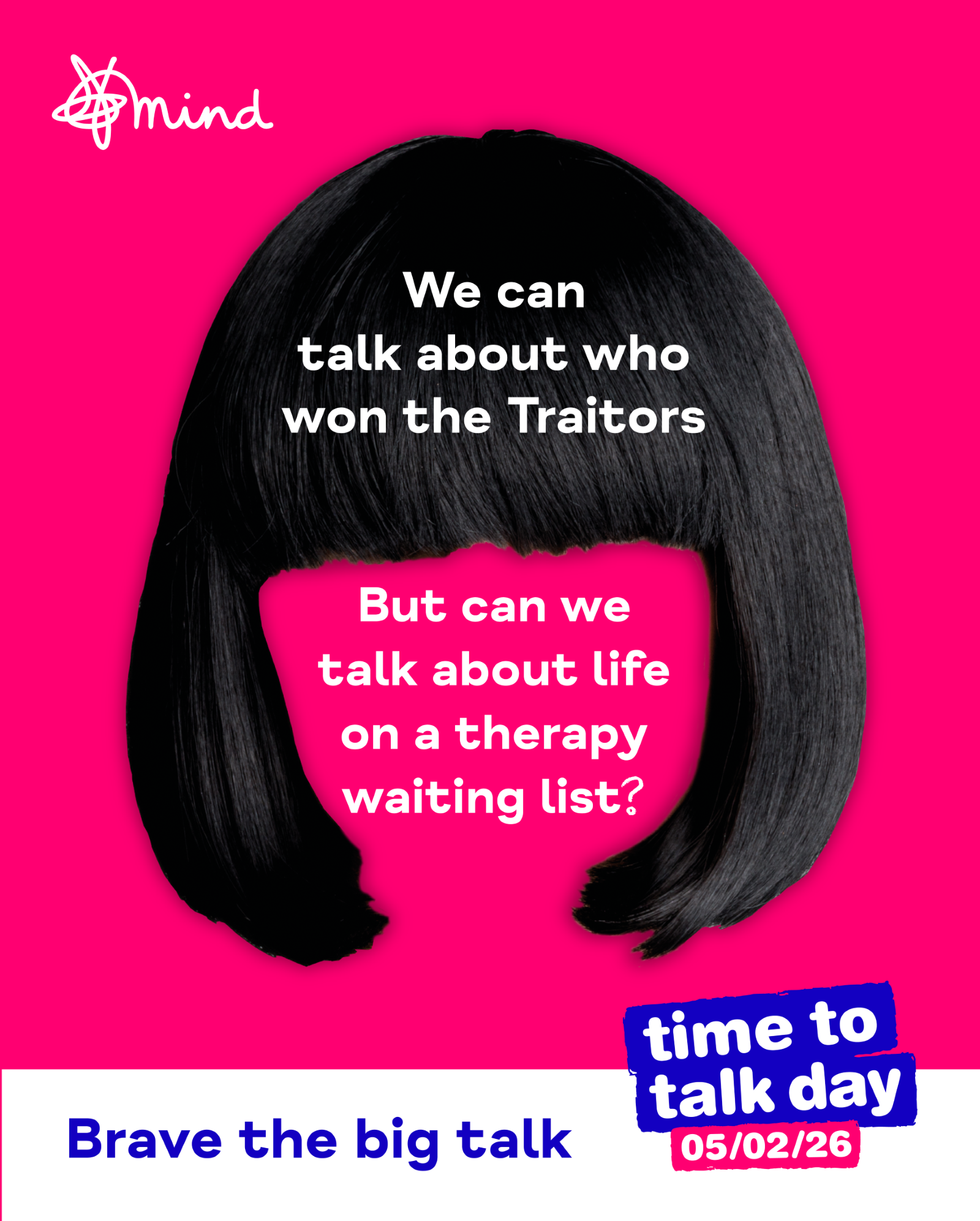
If you share one of these graphics on your social feed, you might encourage others to open up about their own mental health experiences - and that’s exactly what Time to Talk Day is all about.

If you ever feel unsure about how to respond, or if someone needs more support than you can offer, you can direct them back to this page. We’ve got lots of guidance and resources for anyone who’s struggling. Here's some suggested wording to include in your post.

Caption wording:
Brave the big talk this #TimeToTalkDay.
Opening up about our mental health can be the first step towards getting help.
If you or someone you care about needs support, visit mind.org.uk/TimeToTalkDay

Download the graphics:
Start a conversation today

From sharing a post on social media using #TimeToTalk to organising an activity in your workplace, or simply checking in with a friend or family member. There are lots of ways to get involved this Time to Talk Day.

Here are some ideas to get started. 

Text a friend to ask how they're doing.

Go for a walk and talk with a neighbour. 

Invite a colleague for a cup of tea and a chat.

Deliver a school assembly on mental health. 

Host a lunch and learn session in your workplace.

Share our campaign graphic on social media.

You’re not only helping yourself and the people around you in that initial conversation but you’re also helping to break down barriers so other people feel more comfortable talking about their mental health.

Resources for schools, workplaces and sports clubs

We want to make it as easy as possible for everyone to start conversations about mental health. To help you get going, we’ve created handy information packs full of simple ideas to get your school, workplace or sports club talking.
Download your schools pack

Download your employers pack

Download your sports club pack

Talking tips

While there’s no right or wrong way to talk about mental health, our talking tips can help you have those all-important conversations.

And if you’re looking for even more guidance on how to support others, take a look at Mind’s Conversations in the Community training.

Tips for supporting someone else

Asking questions can give the person space to share how they’re feeling and what they’re going through. Try to ask questions that are open and non-judgmental, like ‘what does that feel like?’

Small verbal comments like ‘I see’ or ‘what happened next?’ will let them know you are paying attention to them and actively listening.

Try to resist the urge to offer quick fixes to what someone is going through. Just talking can be really powerful, so unless they’ve asked for advice directly, it might be best just to listen.

Mental health problems are more common than people think. They can affect anyone at any time. Comments like ‘Pull yourself together’ or ‘You’re just having a bad day’ are not helpful.

No matter how hard you try, some people might not be ready to talk about what they’re going through. That’s ok – the fact that you’ve tried to talk to them about it may make it easier for them to open up another time. It’s important to let them set the pace for seeking support themselves. 


Tips for sharing your own feelings

This could be a face-to-face conversation, or you might find it easier to talk on the phone, video-call or even write down how you feel.

Sometimes it’s easier to talk side-by-side, rather than face-to-face. There may not be a ‘good time’ and you might want to chat while you are doing something else, like walking or cooking.

You could do this in your head or make some notes. Phrases like “I’ve not been feeling like myself lately” might provide a starting point.

It can sometimes feel uncomfortable sharing something so personal, but explaining how your feelings are affecting your life may help others to understand.

This might just be listening and offering emotional support or there may be practical help you need.


For more guidance, see our pages on helping someone else seek help and opening up about your mental health.

Frequently asked questions

Time to Talk Day was started by Time to Change, a campaign to end mental health stigma and discrimination. Time to Change was run by Mind and Rethink Mental Illness and funded by Comic Relief, Department of Health and Social Care and the National Lottery Community Fund.

Time to Change closed on 31 March 2021, and their charity partners Mind and Rethink Mental Illness made a commitment to continue to deliver Time to Talk Day. This is the second year Mind and Rethink Mental Illness have run Time to Talk Day.

2022 saw Time to Talk Day have a corporate partner for the first time – the Co-op. The Co-op is one of the world’s largest consumer co-operatives with interests across food, funerals, insurance and legal services. Owned by millions of UK consumers, the Co-op is a recognised leader for its social goals and community-led programmes. 

The Co-op’s contribution to 2022 was invaluable and helped Time to Talk Day reach new communities. Co-op are continuing their partnership with Mind, SAMH and Inspire on Time To Talk Day 2023. Co-op don’t want to just fund responses to support mental wellbeing, they want to be part of the responses and will be mobilising their assets, colleagues and programmes to support Time to Talk Day as part of a shared ambition to reach those who wouldn’t ordinarily engage with mental health support.

We want to create a society where everyone feels comfortable talking about mental health – whenever they like. If people feel able to do that, that’s great. Unfortunately, many people still don’t feel comfortable talking openly. Many fear judgment from others. By asking everyone to talk about mental health at a shared moment in time, whether you have a mental health problem or not, we hope people will discover a positive experience that they'll continue whenever they want to.

Public awareness and understanding of mental health has improved in recent years. We now have a much better understanding of the fact that we all have mental health just as we all have physical health, and that we need to look after it. This is a big positive. But too many people still struggle in silence, feeling unable to speak out for fear of what others might think. Public awareness days like Time to Talk Day play an important role in ending this stigma which serves as a major barrier to people accessing help and support.

There are many improvements we want to see across the mental health field and providing people with timely access to treatment and support is an absolute priority. Mind and Rethink Mental Illness campaign tirelessly, holding government to account and offering direct support to those in need. But there are other critical issues that also need to be addressed.

Mental health stigma has serious consequences. The judgement that people face, or fear they face, can mean losing jobs, relationships and in the most extreme cases, lives. That’s why opening up the conversation about mental health problems and ending the stigma is so important.

The vast majority of people we talk to find that things improve when they open up about how they’re feeling. However, for some people, that may not be the case. If so, there are some fantastic online communities and helplines where people can find support and understanding. You can find these websites and numbers on the Mind and Rethink Mental Illness websites.

We know that talking about mental health can feel difficult or scary. But many people with lived experience of mental health problems have told us that a small gesture or conversation made a big difference in helping them open up and get support. This may not be the case for everyone. But by showing that a conversation about mental health doesn’t have to be daunting, we can encourage more people to open up to the topic. And be there to support their friends, family or colleagues if they’re struggling.

We know that a squeeze on living standards, unmanageable debt and economic recessions can contribute towards mental health problems. While we would still encourage being open to discussing your mental health, we also know that practical support is important in this context. Read our information on how to manage your finances and where to seek support.


Other ways to get involved

arrow_upwardBack to Top