Got a minute to help? take our quick website survey >
Waiting for support from CAMHS
Lots of us need support for our mental health. This means there can be long waiting lists for a first appointment. There can also be waiting times for any treatment and support CAMHS might offer.
Waiting for support from CAMHS can feel like a long and difficult time. This page has some information about waiting times and what support you can get while you′re waiting.
What's on this page?
Jump to information on:
How long is the waiting time for CAMHS?
How long we have to wait can depend on what help we need and where we live.
Usually, your CAMHS will reach out to you when you get to the top of the waiting list. You′ll receive an appointment letter from a CAMHS professional, and they may contact you to check you′re able to attend.
In England, some specialist CAMHS pathways have specific rules for how long you should wait. For example:
- Early intervention in psychosis services. You should start treatment within 2 weeks after CAMHS get your referral.
- Eating disorder services. There are targets for how quickly CAMHS should see you. They should offer you an assessment within 15 days of getting your referral. And treatment should start within 4 weeks of your referral. But this might happen sooner depending on your situation.
In Wales, there aren′t set rules for waiting times, but they should still see you as soon as possible.
When CAMHS get your referral, it′s OK to ask them how long you might have to wait. We have more information about how referrals work.
We might think that we need to be at crisis point to get help, but that′s not true. You deserve help and support at any stage.

It has been 2 months since I had my CAMHS assessment, and I am finally on the waiting list for some help. It has been 7 months since I have asked for help, and I am expected to wait another several months before I can start to access some support – Jane, 16
Talk to other professionals
- Speak to your GP. They might be able to suggest other ways to get help while you wait. We have more information about talking to your GP.
- Contact your local CAMHS. They might be able to tell you when you should get an appointment. You can also ask them if there's anything you can do while you wait. Or let them know if you′re worried that things are getting worse while you wait.
- Look at what help is available in your area. Like from your school, local charities and community services. For online services where you can search for local information and support, try Hub of Hope and Youth Access.
- Think about looking for private therapy. Private therapy is a type of support option that you, or a trusted adult, can choose to pay for. You can search the BACP Counselling Directory to find a therapist or counsellor. Or ask a trusted adult to help you. Private therapy can be expensive. Some private therapists offer discounts if you're a student or on a low income, which can help.
For more information, see our page on where to look for mental health support.
Talk to other services
You could try talking to someone who is trained to listen. Helplines, text and web chats are there to support you.
We've listed some organisations that might be able to help support you while you wait:
- PAPYRUS. Support and advice for anyone under 35 experiencing suicidal thoughts or finding it hard to cope.
- Childline. Has message boards where you can speak to a counsellor or chat to other young people.
- The Mix. Webchat and email helpline, crisis textline, 1-2-1 online chat and video, webchat or phone counselling service. You can also use discussion boards to talk to other young people.
- Alumina. Free, online self-harm support for 10- to 17-year-olds.
- Self Injury Support. Information and support, including a helpline and text messaging service.
You can find more options on our page of useful contacts.


Apps for mental health
Some apps can help us with things like feeling calmer or managing difficult experiences. But with so many apps, it can feel hard to know where to start.
To find safe, trustworthy apps for young people, visit Mind's app library.
You always hear that the waiting list is so long or it's too prescriptive – just because CAMHS says this isn′t for you or it isn′t working, there are other options if things aren′t going well for you.

Take care of yourself
It′s really important to look after yourself while you′re waiting for treatment. Here are some tips:
- Read, listen to, or watch things that have ideas about how to cope with what you're feeling. You can get resources online from the getselfhelp.co.uk website. Some of these resources have been designed for adults, but you may find them helpful too.
- Fill out a safety plan for yourself or with a trusted adult so they can support you too. This is a way to write down things that help you feel safe. We have a downloadable safety plan that you could fill in together. Or you can fill in a plan just for you. Each of these safety plans will open as a PDF in a new tab.
- Create a self-care box. Fill a box with things that bring you comfort when you're feeling low or finding things hard. You can include things that help you feel better or things that help you feel safe.
- Write down, draw, paint or sculpt how you feel. Some of us find that this helps us to express how we feel without speaking. If you feel comfortable, you could share these with your CAMHS team in your first appointment.
- Read blogs written by other young people who have been through similar things. You can find blogs on the YoungMinds website.
We also have lots of other ways to look after your wellbeing.
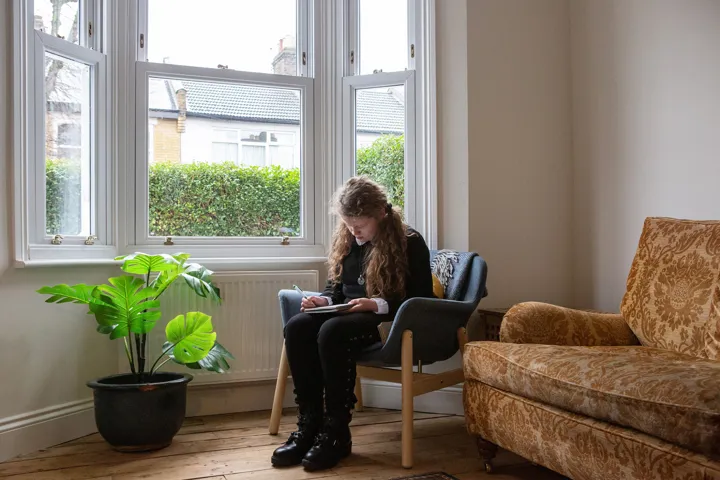
For me, journaling and writing stuff down on a page is so helpful. If you struggle with intrusive thoughts like me, it helps to see them objectively on a page, as they feel far less scary.
Build your support network
You can try different things to help build up and expand your support network:
- Open up to someone you trust about how you're feeling. You could talk to them face-to-face or record a voice note. Tell them when you're having a good day, as well as when things feel hard. Ask them about ways they could support you while you′re waiting. You can find more tips on our page about opening up.
- Talk to other young people who understand what you're going through. You can do this on message boards like The Mix and Childline.

What if I turn 18 while waiting for support from CAMHS?
CAMHS usually support young people up to 18 years old. But some CAMHS services might discharge you or start your move to Adult Mental Health Services (AMHS) before you turn 18. Others may support you until you're 25 or older. This will depend on your needs and where you live.
Usually, if you′ll turn 18 before your first appointment or before you start treatment, CAMHS won’t be able to offer you appropriate support.
If CAMHS can′t support you because of your age, they should talk to you about other services that could support you better. This could include local services or organisations.
You can get in contact with CAMHS or the person who referred you. You should have a contact number on the letter or email CAMHS sent you.
We have some services at Mind that you may want to look at:
Find out more about adult services and other options in our page on leaving CAMHS.
Trusted adult
A trusted adult is someone older than you who:
- Makes you feel safe
- Listens to you
- Treats you with respect, understanding and care
They will have clear boundaries but will support you when they can. They should know when to look for more help if you need it.
You can decide who you feel is a trusted adult to you. You might know them from somewhere like school, your family, places of worship or clubs for young people.
Trusted adults don't have to be the same people as nearest relatives.
Visit our full treatment and support glossaryDischarge
This means your treatment at a hospital, clinic or other service is ending. You may be discharged because:
- You’ve completed your treatment
- You’re old enough to use a different service
- You’ve asked to leave
- The next part of your treatment needs to continue somewhere else
Your care team should explain what this means, and what will happen if you need care in the future.
Visit our full treatment and support glossaryAdult Mental Health Services (AMHS)
These are NHS services that support adults with mental health problems.
Visit our full treatment and support glossaryPublished: March 2026
Next review planned: March 2029
We spoke to young people who agreed to give quotes for this page. Their experiences are not related to the people shown in the photos.
References are available on request. If you want to reproduce this content, see our permissions and licensing page.